
How Much Weight Can a Residential Deck Hold?
Your deck may regularly hold patio furniture, a grill, family members, and guests without giving you a second thought. When you’re planning a large gathering or considering a heavy addition such as a hot tub or outdoor kitchen, you may start wondering about your deck’s weight threshold.
There isn’t one universal answer. A deck’s ability to safely support weight depends on its design, framing, materials, dimensions, condition, and support system. The intended use of the deck matters as well. Understanding the basics of residential deck load capacity can help you recognize when a professional inspection or structural evaluation may be necessary.
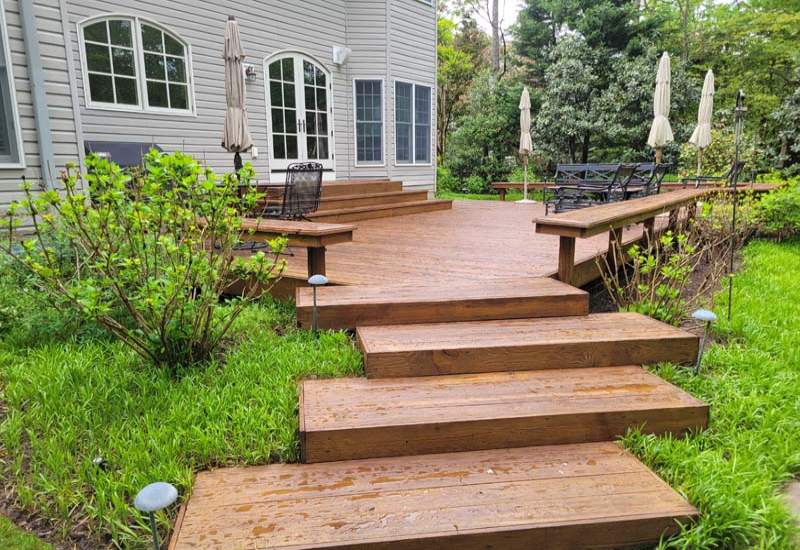
Understanding Residential Deck Load Requirements
When discussing deck weight capacity for your new deck, it’s important to distinguish between two basic types of loads.
A dead load is the permanent weight of the deck structure and other stationary components. A live load is a temporary or movable weight placed on the deck, including people and furniture.
The International Residential Code recommends a minimum live load of 40 pounds per square foot for residential decks. That doesn’t mean every existing deck can safely support that amount or that you should calculate a deck’s capacity simply by multiplying its square footage by 40.
Actual deck load requirements and construction requirements can vary, and the capacity of an existing deck depends on its specific structure and condition. When there’s any question about structural safety, a qualified professional should evaluate the deck.
Factors That Affect Deck Weight Capacity
Several components work together to determine deck structural capacity. These typically include:
- Framing and Support: Joists, beams, posts, connections, and footings all contribute to the structural system. The sizes and spacing of supporting joists, beams, and footings can influence how much weight a deck can handle.
- Materials: The materials used in construction can also affect performance. Different types of wood have different properties, and the deck’s entire structural system needs to be designed with anticipated loads in mind.
- Age and Condition: Even a properly constructed deck can deteriorate over time. Rot, decay, insect damage, cracks, loose connections, and other deterioration may affect its ability to safely carry loads.
- Design: Size and overall structural design also matter. The spans and spacing of the supporting structure influence load-bearing capability.
Signs Your Deck May Be Struggling Under Excess Weight
Visible changes or deterioration deserve attention, especially before adding more weight. A visual inspection can uncover some concerns, but it cannot necessarily establish a deck’s safe load capacity.
Warning signs may include:
- Sagging or uneven areas
- Cracked or deteriorating components
- Rot or decay
- Loose structural connections
- Noticeable damage within the framing or supports
Can Your Deck Support Heavy Features?
Hot tubs, outdoor kitchens, and other substantial features deserve special consideration during deck planning. Rather than assuming your existing deck is strong enough, have its structure evaluated before installing a particularly heavy feature. An assessment may consider the feature’s anticipated weight, as well as the deck’s framing, supports, footings, dimensions, and condition. This is especially important with older decks because deterioration can potentially reduce capacity over time.
When to Call a Deck Professional
If you’re unsure about residential deck load capacity, don’t rely on online estimates alone. While calculators can produce rough estimates, they shouldn’t replace professional assessment. Consider seeking professional guidance if:
- You’re planning to add a hot tub or outdoor kitchen.
- The deck has visible sagging, rot, cracking, or deterioration.
- You don’t know how the existing deck was constructed.
- You’re concerned about an older deck’s condition.
- You’re planning significant changes to the structure.
- You need to determine the deck’s actual load-bearing capacity.
Build Confidence in Your Deck With Five Star Deck Service
Five Star Deck Service is here for all your deck needs in Odenton, Arnold, Annapolis, Crofton, and Severna Park, MD. If you’re concerned about your deck’s condition or planning changes that could add substantial weight, we’re here for you. Contact us today to learn more about deck requirements.
Frequently Asked Questions About Deck Weight Capacity
How Much Weight Is a Standard Residential Deck Designed to Hold?
It’s generally recommended to use a minimum live load of 40 pounds per square foot for residential decks. The actual capacity of an individual deck depends on factors including its design, materials, joist and beam spacing, footings, and condition.
How Can I Tell if My Deck Is Overloaded?
Sagging, cracks, rot, loose connections, and other visible damage can signal structural concerns. Appearance alone cannot establish a deck’s safe capacity. If you’re unsure about the structure, a professional evaluation is the safer approach.
Should Older Decks Be Inspected Before Hosting Large Gatherings?
If an older deck shows deterioration or its structural condition is unknown, having it evaluated before putting additional demands on it is a prudent safety measure. Age, weather exposure, rot, decay, and insect damage can affect deck components and potentially reduce capacity.
Can I Put a Hot Tub on My Existing Deck?
Don’t assume an existing deck can support a hot tub. Hot tubs are specifically identified as a feature whose weight may need additional consideration, so the deck should be professionally evaluated for the intended installation.
Does Deck Size Determine How Much Weight It Can Hold?
Not by itself. Overall design and size play a role, but materials and the sizes and spacing of joists, beams, and footings are also important factors in determining capacity.