
How to Choose the Right Deck Railing for Safety and Style
There is nothing quite like stepping out onto a beautiful custom deck on a crisp Maryland morning, coffee in hand, or hosting a weekend crab feast with friends and family. But if you’re looking at your outdoor space and realizing it needs an upgrade, there is one feature you can’t afford to overlook. Your deck railing. Your deck railing stays right in your sightline, so you want them to be safe, but also look great. Let’s break down exactly how to balance local safety codes, material durability, and your personal style so you can find the perfect match.
Deck Railing Safety Requirements
Before we get into the fun style choices, we have to talk about deck railing safety. First and foremost, railings are there to prevent falls, which means they need to meet strict local building codes here in MD.
- The Height Rule: If your deck floor sits more than 30 inches off the ground, the International Residential Code (IRC) requires your railing to be at least 36 inches tall.
- The Baluster Gap: To keep little feet, paws, and heads safe, the spacing between your balusters (the spindles) must be less than 4 inches apart. A good rule of thumb is that a standard 4-inch ball shouldn’t be able to slip through anywhere.
- The Strength Test: The entire guardrail assembly has to be tough. It must be strong enough to withstand a concentrated load of 200 pounds of pressure pushed in any direction at the very top of the rail.
Consider Deck Railing Materials
The deck railing materials you pick will determine how much upkeep you’ll have to do and how your deck handles the elements. Here are the most popular options we see homeowners choosing:
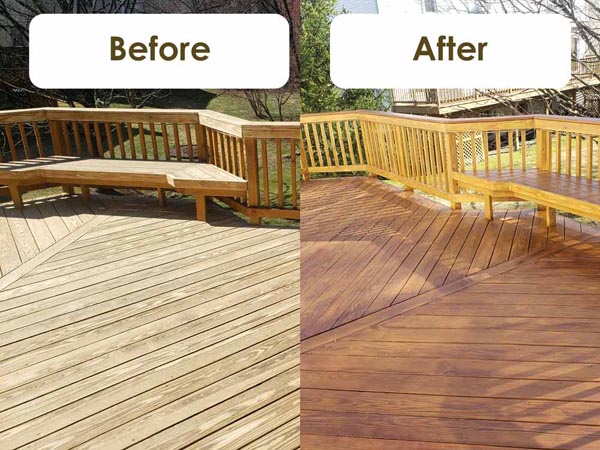
- Wood: It’s classic, warm, and highly customizable. Wood railings offer a traditional look and can be stained to match your deck beautifully. Just keep in mind they do need routine love (like sanding and sealing) to prevent warping and rotting.
- Composite: Engineered from a mix of wood fibers and recycled plastics, composite railings resist rot, insects, and splinters. They have a heavy, high-end feel and give you the look of wood without the intense weekend chore list.
- Aluminum and Metal: Aluminum is incredibly strong, lightweight, and powder-coated to shrug off rust. It gives you a sleek, modern, low-profile look that holds up beautifully against Maryland’s humid summers and icy winters.
- Vinyl: Budget-friendly and incredibly low-maintenance, vinyl never needs to be painted or stained. A quick wipe-down keeps it looking bright, though it offers a few less custom color options than metal or wood.
- Cable: Cable railing uses thin horizontal cables instead of traditional balusters. This creates a streamlined look and can help preserve views from the deck.
Match the Railing to Your Home’s Style
Your railing shouldn’t look like an afterthought. The best railings feel like a seamless extension of your home’s architecture. Here are a few deck railing ideas to inspire your design:
- Traditional: If you live in a classic Maryland colonial or craftsman home, a wood or heavy-profile composite railing with square white balusters and a dark top rail looks absolutely timeless.
- Modern & Minimalist: Love clean lines? Sleek black aluminum railings or horizontal cable systems offer a beautiful, contemporary, industrial edge.
- Coastal / Transitional: Want a breezy, open feel? Pairing crisp white vinyl or composite posts with round, black metal balusters perfectly bridges the gap between traditional comfort and modern flair.
Consider Visibility and Privacy
Do you have a stunning backyard view you want to frame, or are you looking to block out the view of your neighbors’ driveway? Your railing choices play a huge role in your line of sight.
- For the Best View: If your deck overlooks a gorgeous garden, woods, or water, look into thin, round black aluminum balusters. Fun trick: black actually vanishes visually against natural backgrounds, giving you an unobstructed view. Cable railings are also fantastic for this!
- For Added Privacy: If your neighbors live a little close for comfort, a custom deck railing featuring wider, closely spaced composite or vinyl slats can act as a beautiful, built-in privacy screen.
Choose a Railing That Fits Your Deck Design
The overall layout and size of your deck should guide your final choice. A massive, multi-level deck looks great with a heavier, more substantial composite railing system. On the flip side, a smaller, elevated bump-out deck looks best with a slim, minimalist metal rail that keeps the space from feeling cramped.
If your backyard project involves a deeper makeover, like redecking an existing structure while keeping the original structural pillars and beams, swapping out your old wood rails for a modern aluminum or premium composite system is the easiest way to make the whole space look brand new.
Why Choose Five Star Deck Services?
When you are ready to redeck your space, or bring your old wood back to life, or upgrade your outdoor deck railing in Annapolis, MD, you want a team that cares about the details. At Five Star Deck Services, we treat your home like our own. We stand out from the crowd by using top-tier materials engineered to survive our changing seasonal weather without cracking or failing. Contact us today to explore your options.
Frequently Asked Questions
What Is The Best Material For Deck Railings?
The best deck railing material depends on your style, budget, and maintenance preferences. Composite and aluminum railings are popular choices because they are attractive and built to withstand changing Maryland weather.
How High Should Deck Railings Be?
For most residential decks, railings should be at least 36 inches high when the deck surface is more than 30 inches above the ground. Local requirements can vary, so it is always best to confirm the current code for your project.
What Type Of Deck Railing Requires The Least Maintenance?
Vinyl, aluminum, and composite deck railings usually require the least maintenance. Unlike wood, they do not need regular staining or sealing, and most can be kept clean with occasional washing.